English
- English
- 中文
2025,Is the peak of iPhone 14 series phone battery replacement coming?
Time: 2025-01-06 10:23:04
Author: Shenzhen GXHS Electronic Technology Co., Ltd.
Click:
Nowadays, smartphones have long been an indispensable part of our lives, and the iPhone is the best of them, with each generation of products attracting attention. For the majority of iPhone users, battery life often becomes the most worrying issue after a period of use. It's worth noting that the iPhone 14 series is likely to experience a surge in battery replacements in 2025.
Nowadays, smartphones have long been an indispensable part of our lives, and the iPhone is the best of them, with each generation of products attracting attention. For the majority of iPhone users, battery life often becomes the most worrying issue after a period of use. It's worth noting that the iPhone 14 series is likely to experience a surge in battery replacements in 2025.
Judging by the release timeline, the iPhone 14 series debuted in 2022, and by 2025, the phones will have been in use for two to three years. Generally speaking, after hundreds of charging and discharging cycles, the battery capacity of lithium batteries will gradually decay, and the battery life performance will plummet. According to data from market research institutes, the battery health of most smartphones drops below 80% on average after about two years of use, which is also the point at which many users clearly perceive a lack of battery life. Taking the iPhone 14 as an example, many of the first users reported that under the intensity of daily use, one charge a day was more than enough when they first started, but in 2024, some heavy users even need to charge it two or three times a day, and they must carry a power bank when they go out, which seriously affects the user experience.
Furthermore, considering the characteristics of the iPhone user group, a large percentage of consumers who buy the iPhone 14 series are driven by Apple's branding, system smoothness, and long-term use. This means that they will not easily replace the phone with a new one within two or three years, but are more inclined to 'rejuvenate' the phone by replacing the battery for a few more years. Especially for those users who do not have a contract machine binding and buy at full price, the cost performance of replacing the battery is far greater than buying a new machine in their eyes. In addition, although the continuous update of the iOS system brings new features to older models, it also increases the hardware burden to a certain extent, which increases battery consumption and further generates the need to replace the battery.
There is another factor that cannot be ignored – the second-hand market. The iPhone 14 series, as a newer model, is quite active in the second-hand trade. After purchasing the equipment, many second-hand buyers usually give priority to checking the health of the battery in order to ensure the user experience, and if it is not ideal, replacing the battery has become the first priority. The convergence of this demand will also add fuel to the battery replacement market in 2025. With all these factors in mind, it seems that the battery replacement boom for the iPhone 14 series in 2025 is gaining momentum, and it remains to be seen whether the future will be as expected.
1. Analysis of the current situation of iPhone 14 series batteries
(1) Battery capacity and battery life
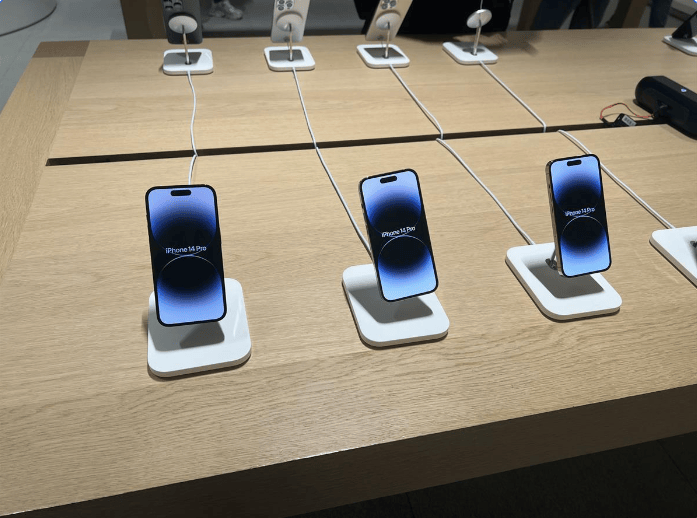
When the iPhone 14 series debuted in 2022, it brought some hardware upgrades and the same tweaks to the battery. The iPhone 14 has a 3,279mAh battery, a slight improvement from the iPhone 13's 3,227mAh. The iPhone 14 Plus has expanded the battery capacity to 4325mAh, making it the largest battery capacity in the series. The iPhone 14 Pro battery is 3200mAh, which is an increase from the iPhone 13 Pro's 3095mAh; The iPhone 14 Pro Max has a 4,323mAh battery, which is slightly shrunk from the iPhone 13 Pro Max's 4,352mAh.
Judging from Apple's official battery life data, the iPhone 14 series performs adequately. Apple claims that the iPhone 14 is "full of power to keep you going from morning to night" and that it can play up to 20 hours of video. The iPhone 14 Plus has the best battery life in the range, with up to 26 hours of battery life for offline video playback, 20 hours of streaming video playback, and up to 100 hours of audio playback. iPhone 14 Pro video playback for up to 23 hours; iPhone 14 Pro Max has up to 29 hours of video playback. Overall, compared with the previous generation in the same scenario, the battery life has been improved by about 1 hour. However, this is only data in an ideal environment in the laboratory, and the autonomy performance in actual use is greatly reduced by many factors. Many users have reported that if they frequently use social media, take photos, and navigate on the go, the iPhone 14 battery will run out in the afternoon, and although the iPhone 14 Pro Max is slightly better, it can't last up to a whole day of heavy use, and it is difficult to achieve the official "all-day battery life" effect.
(2) The problem of battery aging is prominent
Less than a year after it was launched, the iPhone 14 series' battery aging problem has been frequently complained about by users. On social platforms at home and abroad, a large number of users posted screenshots of the battery health of their mobile phones, complaining that the battery health has declined too fast. Some foreign netizens said: "My iPhone 14 Pro has only been used for less than 1 year, and the battery health has dropped to 90%, which is really unacceptable." There are also many users in China who have reported that the battery health of their iPhone 14 series mobile phones has dropped below 90% after a few months of use, and even the battery health of some users on the iPhone 14 Pro Max is only 87%. In contrast, some iPhone 12 Pros that are 3 years old still have a battery health rating of around 84%. Under normal circumstances, the battery capacity of the lithium battery will gradually and significantly decay after hundreds of charging and discharging cycles, but the sharp decline of the iPhone 14 series in such a short period of time obviously exceeded user expectations and raised questions about the quality of the battery.

2. Exploring the reasons for battery aging
(1) Hardware factors
The lithium battery in the iPhone 14 series works based on the shuttle motion of lithium ions between the positive and negative electrodes. During charging, lithium ions come out of the positive electrode and pass through the electrolyte and intervene into the negative electrode; In the case of discharge, the opposite is true, the lithium ions return from the negative electrode to the positive electrode, and the electrons flow outside the circuit to form an electric current that supplies power to the mobile phone. However, each such charge-discharge cycle will cause a certain loss to the internal structure of the battery.
From the perspective of battery cathode and anode materials, with the increase of the number of cycles, the crystal structure of the cathode material may change, such as the change of lattice parameters and grain breakage, which makes it more difficult for lithium-ion to intervene and exit, and the battery capacity decreases. The layered structure of graphite, which is commonly used as an anode material, will be gradually destroyed during repeated charging and discharging, affecting the storage capacity of lithium ions. Taking the iPhone 14 Pro as an example, after 500 full charge and discharge cycles, the battery capacity may drop by 15% - 20% compared to the initial state, which makes the battery life of the phone shrink significantly.
In addition, the electrolyte inside the battery will also deteriorate over time. The electrolyte is responsible for the conduction of lithium ions, but its properties are not stable, and it will gradually decompose and deteriorate due to factors such as electric field and temperature for a long time, hindering the transmission efficiency of lithium ions, further accelerating the aging process of the battery, and making the battery health decline rapidly like "water that opens the floodgates".
(2) The influence of software and usage habits
At the software level, frequent OTA updates of the iOS system are a major culprit. While each upgrade brings new features and bug fixes, it also requires more hardware. When the new system is running, there are more background processes and the CPU load increases, so the battery needs to continuously output more power to keep the phone running smoothly. Like the iOS 16.5 update, some iPhone 14 users reported that after the upgrade, the power consumption rate has become significantly faster even in standby mode, and the power loss has soared from the previous 3% - 5% to 8% - 10% overnight, which undoubtedly exacerbates the aging of the battery.
Daily usage habits are closely linked to battery life. Energy-intensive applications run for long periods of time, such as playing large games such as Genshin Impact, shooting 4K videos for long periods of time, or downloading at high speeds using 5G networks, require the phone's chip to run at full capacity, and the battery discharges quickly, generating a lot of heat, and the high temperature environment will in turn damage the stability of the battery's internal chemicals, forming a vicious cycle and severely compromising battery life.
The "lethality" of bad charging habits should not be underestimated. Playing with the phone while charging, especially when running large programs, the phone is seriously heated, and the battery not only has to accept the charging current, but also bears additional pressure at high temperatures, accelerating the aging of the battery; Overcharging, leaving the battery at a high voltage for long periods of time, and often waiting for the battery to run out to a very low level before charging, can lead to an imbalance in the internal chemical reactions of the battery and shorten the battery cycle life. According to statistics, iPhone 14 users with such bad charging habits are 30% more likely to have their battery health drop below 90% within half a year, which is 30% higher than that of users with good charging habits.

3. The necessity of replacing the battery
(1) Difficulties in limited performance
When the battery health of iPhone 14 series phones decreases, the performance of the phone is significantly affected. The principle behind this is that the battery, as the energy supply source of the mobile phone, will take the initiative to reduce the frequency in order to maintain the basic operation of the mobile phone system as its capacity decays and the output voltage is unstable. For example, when the battery health drops below 80%, when playing a game with high frame rate requirements such as "Honor of Kings", the picture that could have been stable at 60 fps will frequently freeze, and the frame rate will even drop below 40 fps, and the release of the man's skills will become unsmooth, which will seriously affect the game experience.
In terms of daily app launches, the time it takes for the phone to fully open the app becomes significantly longer as the battery ages. In the case of WeChat, for example, the new phone turns on instantly, while the iPhone 14 with an aging battery may have to wait 3-5 seconds, which is really frustrating in the fast-paced life of racing against time, and every time you open the app, it is like a test of patience, which greatly interferes with the smoothness of daily use.
(2) Endurance anxiety problem
The iPhone 14 series phones in a low battery state will cause users to fall into deep battery life anxiety. Imagine that on the way to the office, your phone battery is only 20% left, and there are several important meetings to attend, you can't do without your phone for navigation, research, and email response, but you have to look around for a charging outlet, and you are constantly worried about your phone turning off and missing out on key information. Or when you go out to play, you want to take photos to record beautiful moments, but your mobile phone has a low battery, and frequent pop-up prompts prompt, and you have to worry about running out of power every time you take a few photos, and your interest in playing is greatly reduced.
Compared with the endurance performance of the new machine, the need to replace the battery is becoming more and more urgent. A freshly opened iPhone 14 can easily handle a full day of routine outings when fully charged, so you don't have to worry about battery level from morning to night. After two years of use, the same usage scenario may have to be connected to the power bank at noon, otherwise there is a risk of "losing contact". Replacing the battery is like injecting a "booster" into the phone, which can make it return to the state of "full power", get rid of the haze of battery life anxiety, and once again provide stable support for life and work.
4. The market environment and consumer choice
(1) Analysis of official battery swap services
Apple officially provides users with a relatively convenient channel to change the battery. If you want to replace your battery, you can make an appointment through Apple's official website, choose to send it in for repair, and choose a convenient time and repair point, such as an Apple Store or an authorized service provider. If your device is covered by a one-year warranty, AppleCare+ service plan, or consumer law, and the battery capacity is less than 80% of its initial capacity, the battery can be replaced free of charge; If it is not covered, it will be charged. Take the iPhone 14 series as an example, its out-of-warranty battery replacement price is currently 748 yuan.
However, in recent years, Apple's official battery replacement price has been on the rise. Today's prices are prohibitive for some consumers compared to the past. From the perspective of service quality, the official use of genuine Apple batteries, which have been carefully designed, tested and manufactured to meet Apple's safety and performance standards, and provide a 90-day warranty after replacement, so that consumers can rest assured. However, compared with other brands, Apple's battery replacement price is obviously high, such as Huawei's battery replacement price for some models is as low as 99 yuan or 129 yuan, Xiaomi's battery replacement for some flagship machines with labor costs is only 199 yuan, and vivo has many models with a battery replacement price of about 128 yuan and no labor costs. This makes many consumers hesitate due to price factors when considering official battery swap services.
(2) Observation of the third-party battery swap market
In the third-party battery swap market, price advantage is its "weapon" to attract consumers. On e-commerce platforms, many merchants sell batteries adapted to the iPhone 14 series, with prices ranging from tens of yuan to more than 200 yuan, and often attract customers with promotional means such as "buy batteries and get tools" and "free installation tutorials". The same is true for offline repair shops, where the total price of an iPhone 14 battery, including manual fees, is usually 200-300 yuan, which is more than half the official price. In addition, offline repair shops can also provide immediate and desirable services, without the need to make an appointment in advance and wait for a long time like the official one.
In addition to simply replacing the battery, some third-party companies have also launched battery packages, such as value-added services such as "battery replacement + deep cleaning of the phone" and "battery replacement + screen film" to provide consumers with more choices. However, the third-party market is mixed, and the quality is difficult to guarantee. Some unscrupulous merchants actually sell second-hand disassembled batteries or high-imitation batteries under the banner of "original batteries", which not only have poor battery life, but also may have potential safety hazards. The maintenance personnel of some offline shops are not up to standard, and other parts of the mobile phone may be damaged during the process of disassembling and replacing the battery, resulting in new failures of the mobile phone. Therefore, if consumers choose a third-party battery swap, they must refer to store evaluations and word of mouth, choose reputable merchants, and avoid "stepping on pits".

5. Suggestions and prospects
(1) Guidelines for the formation of usage habits
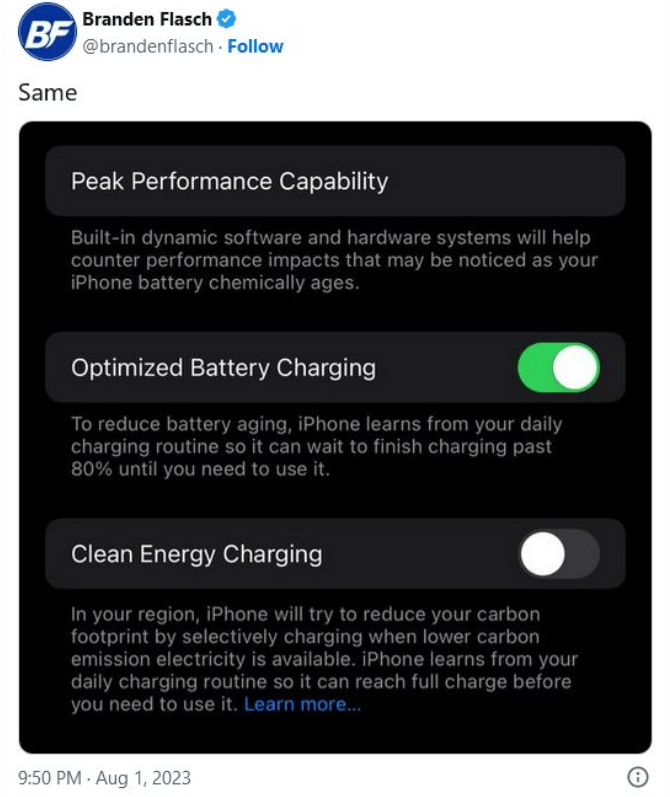
Practicing good habits is key to extending the battery life of your iPhone 14 series. In terms of charging habits, try to avoid recharging after the battery is completely depleted, and do not overcharge for a long time. When the battery level is less than 20%, the charger should be connected in time; When charging at night, turn on the "Optimize Battery Charging" function to let the phone learn your routine, it will charge the battery to the right level before you get up, reducing the time the battery is in a high voltage state for a long time, and effectively delaying the aging of the battery.
When it comes to temperature control, keep your iPhone away from extreme environments. High temperature is very damaging to the battery, avoid placing the mobile phone in the center console of the car in direct sunlight for a long time in summer, and do not expose the mobile phone to the sun for a long time when using it outdoors; In cold weather, try to minimize the use of the mobile phone for a long time in an outdoor low temperature environment, if you must use it, you can equip the mobile phone with a warm shell, and return indoors to wait for the temperature of the mobile phone to rise before using it normally, so as to prevent the battery from plummeting and irreversible damage at low temperatures.
App management should also be ignored, turning off unnecessary background app refreshes to reduce the running time of energy-hungry apps. For example, some infrequently used social and news apps can turn off their background refresh permissions to prevent them from frequently updating data in the background and consuming power; After playing large-scale games, video shooting and other high-load tasks, let the phone rest and cool down appropriately, avoid continuous high-intensity use, and give the battery a chance to "breathe", so as to maintain the healthy state of the battery and prolong its service life.
(2) Industry development prospects
Looking to the future, the wave of battery technology innovation is rolling in, bringing light to the dilemma of smartphone battery life. In the field of new material applications, researchers are committed to the research and development of new cathode and anode materials and electrolytes, such as solid-state electrolytes are expected to replace traditional liquid electrolytes, greatly improving battery safety and energy density, so that subsequent iPhone models can hold more power in the same volume, reducing users' anxiety about battery life.
The balance between fast charging and battery life is also a key breakthrough, and major manufacturers are exploring how to shorten the charging time without sacrificing the cycle life and endurance performance of the battery. On the one hand, higher-power fast charging technology is gradually maturing, and in the future, iPhones may support 100-watt fast charging, which can bring the phone back to life in half an hour or even less. On the other hand, through the intelligent charging management system, the charging power is dynamically adjusted, and the charging process is optimized according to the battery status, temperature and other factors, so as to ensure that the battery remains healthy while recharging quickly, so that the iPhone can find the perfect balance between battery life and fast charging, and open up a new experience of using smartphones.

Home | About Us | News | Contact
Product | battery | Rechargeable | Official Mall
Tel :0755-8860 5858
E-mail:cmq@szgxhs.com
Add : F3, No. 18, Dishan North Road,
Xinsheng Community,Longgang
Street, Longgang District,Shenzhen,
Guangdong, China